


Introduction
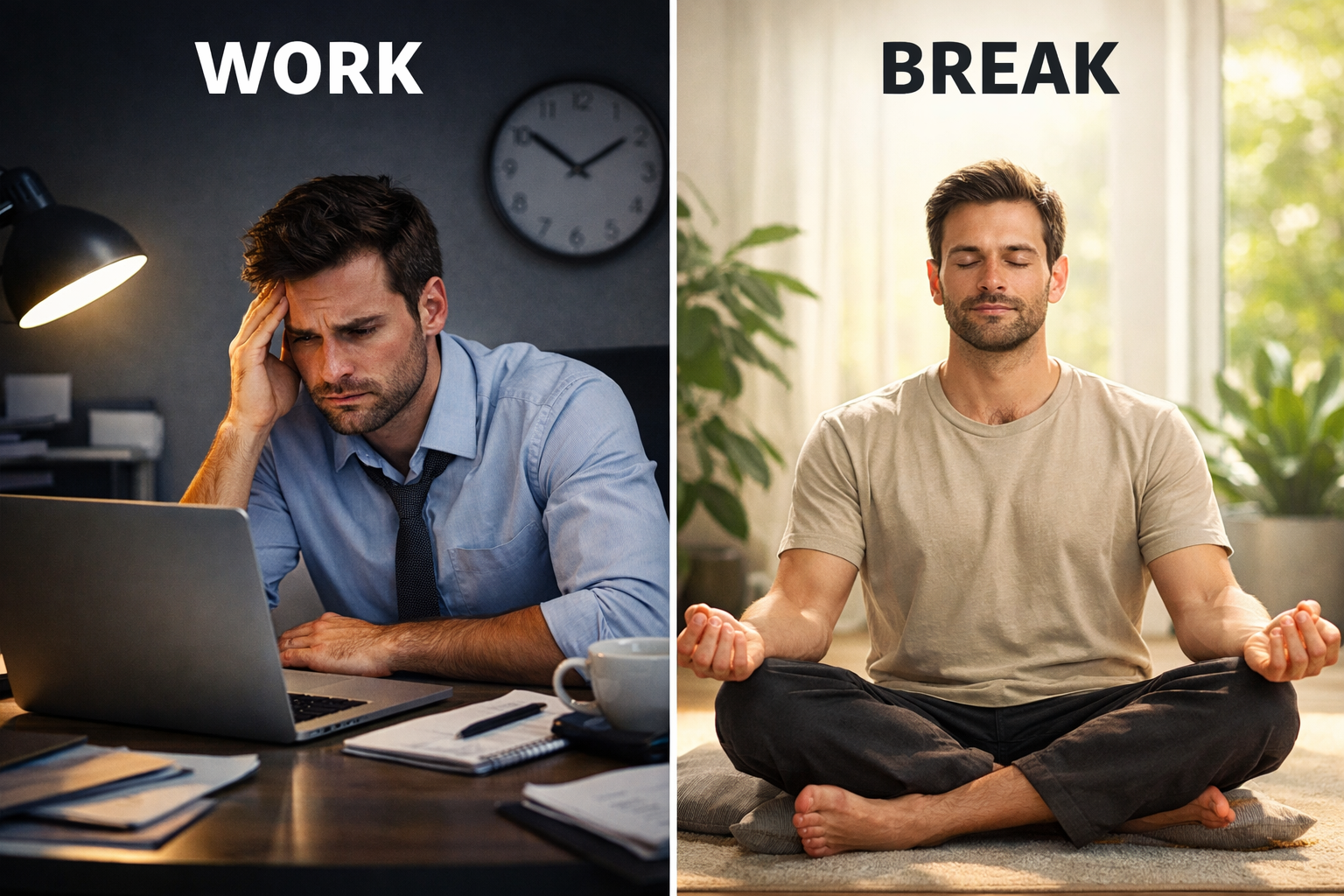
Many people think working non-stop means better results.
👉 But the truth is:
Taking breaks actually makes you more productive—not less.
Without breaks, your body and mind get tired, which affects:
- Your focus
- Your energy
- Your performance
In this article, you’ll learn why taking breaks is essential and how to do it the right way.
Why Breaks Are Important
Your brain is not designed to work continuously for long hours.
👉 Taking breaks helps:
- Recharge your energy
- Improve focus
- Reduce stress
1. Improves Focus
Working too long reduces concentration.
👉 Breaks help you:
- Reset your mind
- Stay sharp
2. Boosts Productivity
Short breaks make your work more efficient.
👉 You can:
- Work faster
- Make fewer mistakes
3. Reduces Stress
Constant work increases pressure.
👉 Breaks help:
- Relax your mind
- Reduce tension
4. Prevents Burnout
Burnout happens when you overwork without rest.
👉 Taking breaks:
- Protects your mental health
- Keeps you balanced
5. Improves Physical Health
Sitting for long periods affects your body.
👉 Breaks help you:
- Move
- Stretch
- Reduce stiffness
Types of Breaks You Should Take
1. Short Breaks
- Every 60–90 minutes
- 5–10 minutes
2. Movement Breaks
- Walking
- Stretching
3. Mental Breaks
- Relax
- Deep breathing
How to Take Effective Breaks
- Step away from your screen
- Move your body
- Avoid distractions
- Keep it short
Signs You Need a Break
🚨 Loss of focus
🚨 Feeling tired
🚨 Making mistakes
🚨 Stress
Common Mistakes
❌ Working for too long without rest
❌ Using breaks on your phone
❌ Skipping movement
Simple Break Routine
- Work for 60–90 minutes
- Take a short break
- Move and reset
Conclusion
Breaks are not a waste of time—they are an investment in your performance.
👉 If you want:
- Better focus
- More energy
- Higher productivity
Take breaks regularly and work smarter—not harder.