




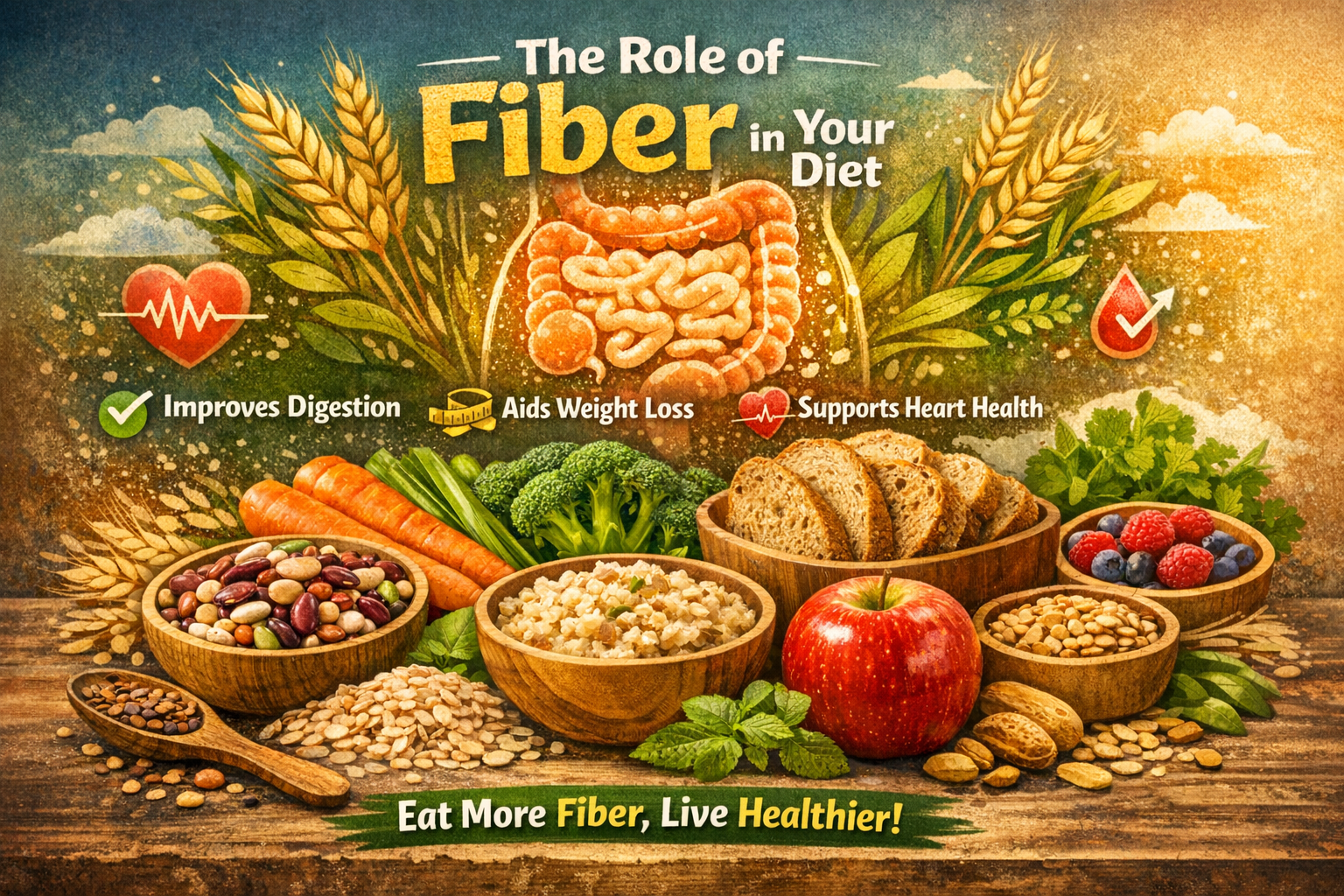
Fiber is one of the most important nutrients that many people don’t get enough of in their daily diet. It plays a major role in digestion, weight control, and overall health.
In this article, we will explain what fiber is, its benefits, and how you can easily include more of it in your daily meals.
🟨 1. What is Fiber?
Fiber is a type of carbohydrate that your body cannot fully digest.
Instead of being broken down, it passes through your digestive system and helps keep it healthy.
🟨 2. Types of Fiber
There are two main types of fiber:
🟢 Soluble Fiber
Dissolves in water and helps slow digestion.
🟢 Insoluble Fiber
Helps food move through your digestive system.
👉 Both are important for your health.
🟨 3. Benefits of Fiber
Fiber provides many benefits:
✔ Improves digestion
✔ Helps with weight loss
✔ Keeps you full longer
✔ Supports heart health
✔ Controls blood sugar levels
🟨 4. Fiber and Weight Loss
Fiber helps you feel full, which reduces overeating.
👉 This makes it easier to:
- Control calories
- Lose weight
🟨 5. Fiber and Digestion
Fiber keeps your digestive system working smoothly.
👉 It helps prevent:
- Constipation
- Bloating
🟨 6. Best Sources of Fiber
🟩 Fruits:
- Apples
- Bananas
- Berries
🟩 Vegetables:
- Broccoli
- Carrots
- Spinach
🟩 Whole Grains:
- Oats
- Brown rice
- Whole wheat bread
🟩 Legumes:
- Beans
- Lentils
- Chickpeas
🟨 7. How Much Fiber Do You Need?
👉 Recommended daily intake:
- Women: 25g
- Men: 30–38g
🟨 8. Common Mistakes
❌ Not eating enough vegetables
❌ Eating too much processed food
❌ Ignoring fiber in meals
🟨 9. How to Add More Fiber Easily
- Add fruits to breakfast
- Eat vegetables with every meal
- Choose whole grains
- Snack on nuts
🟨 10. Drink Water with Fiber
Fiber works best when combined with water.
👉 Drink enough water to avoid digestion issues.
🟨 11. Increase Fiber Gradually
Adding too much fiber suddenly can cause discomfort.
👉 Increase slowly.
🟨 12. Fiber and Gut Health
Fiber supports healthy gut bacteria, which improves digestion and immunity.
🟨 13. Healthy High-Fiber Snacks
- Fruits
- Popcorn
- Nuts
- Yogurt with seeds
🟨 14. Fiber for Long-Term Health
A high-fiber diet helps reduce the risk of:
- Heart disease
- Diabetes
- Digestive problems
🟨 15. Keep It Balanced
Fiber is important, but balance is key.
👉 Combine it with protein and healthy fats.
🟩 Conclusion:
Fiber is essential for a healthy body, yet many people don’t consume enough of it. By adding more fiber-rich foods to your daily meals, you can improve your digestion, control your weight, and boost your overall health.
Start small, stay consistent, and enjoy the benefits.