
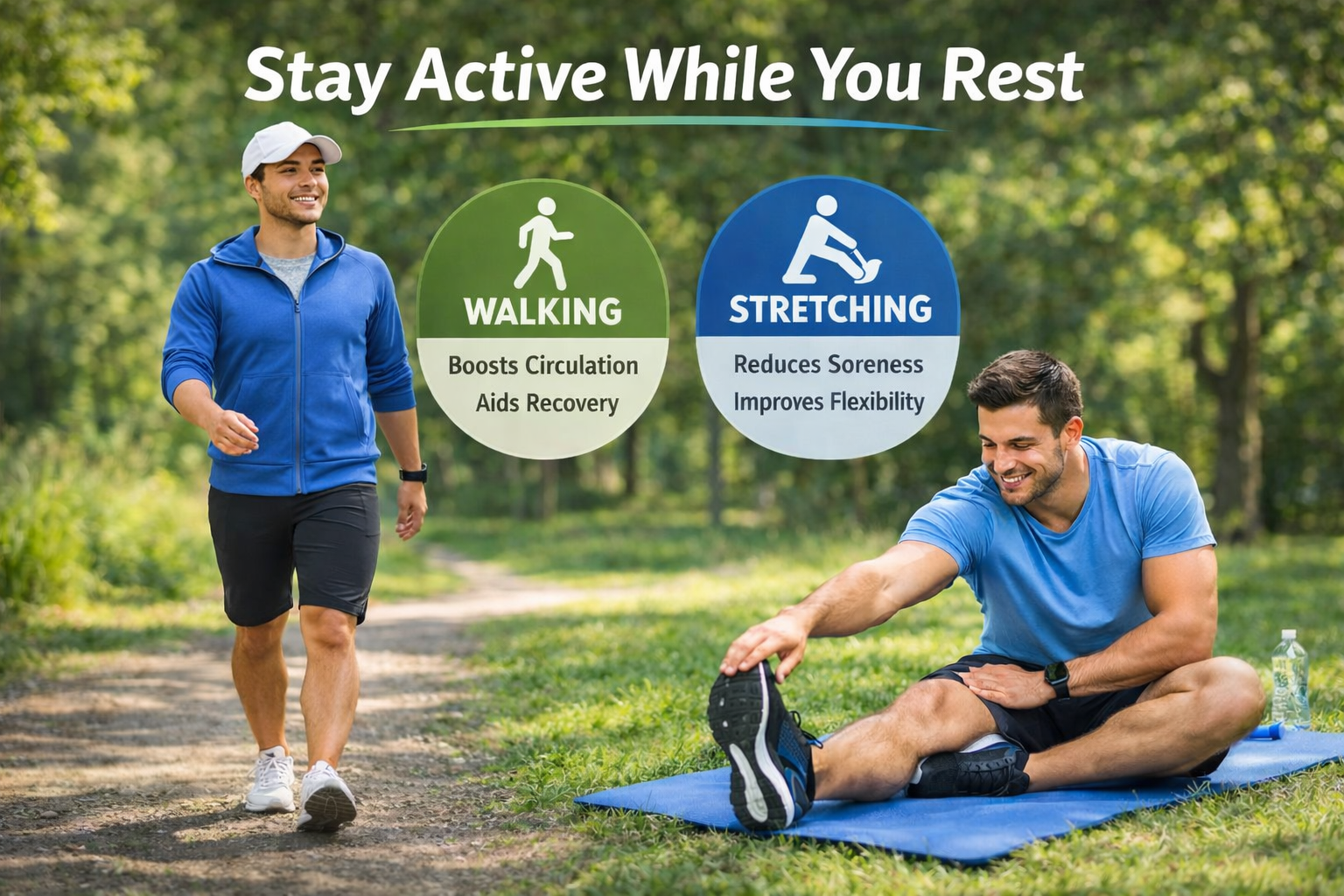
When people think about recovery, they often think about complete rest—but that’s not always the best option.
👉 The truth is:
Active recovery can be even more effective than doing nothing.
Instead of staying inactive, active recovery helps your body heal while still moving.
In this article, you’ll learn why active recovery is important and how to use it correctly.
What Is Active Recovery?
Active recovery means doing light physical activity instead of full rest.
👉 Examples:
- Walking
- Light stretching
- Yoga
- Easy cycling
👉 The goal is to keep your body moving without stress.
Why Active Recovery Matters
Active recovery helps:
- Improve blood flow
- Reduce muscle soreness
- Speed up recovery
- Keep your body flexible
1. Reduces Muscle Soreness
After intense workouts, your muscles can feel sore.
👉 Active recovery helps:
- Increase circulation
- Deliver nutrients to muscles
- Reduce stiffness
2. Improves Blood Flow
Movement helps blood flow better through your body.
👉 This leads to:
- Faster healing
- Better recovery
- Less fatigue
3. Prevents Stiffness
Staying inactive for too long can make your body stiff.
👉 Light movement keeps:
- Joints flexible
- Muscles relaxed
4. Supports Mental Recovery
Active recovery is not just physical—it helps mentally too.
👉 Benefits:
- Reduces stress
- Improves mood
- Keeps you motivated
5. Maintains Routine
Active recovery helps you stay consistent.
👉 Instead of skipping workouts completely, you stay active in a lighter way.
Best Active Recovery Activities
- Walking
- Stretching
- Yoga
- Swimming
- Light cycling
When Should You Do Active Recovery?
👉 Best times:
- After intense workout days
- On rest days
- During recovery weeks
How Intense Should It Be?
👉 Keep it:
- Light
- Easy
- Relaxed
You should feel better—not exhausted.
Signs You Need Active Recovery
🚨 Muscle soreness
🚨 Fatigue
🚨 Stiffness
🚨 Low energy
Common Mistakes
❌ Turning recovery into a hard workout
❌ Skipping recovery completely
❌ Overtraining
❌ Not listening to your body
Simple Active Recovery Routine
- 20–30 min walking
- Light stretching
- Deep breathing
👉 Keep it simple and consistent
Conclusion
Recovery doesn’t mean doing nothing.
👉 Active recovery helps your body heal faster while keeping you moving.
Train hard—but recover smarter.