

Introduction
You can train hard, eat clean, and follow the perfect workout plan—but if your stress levels are high, your progress may still suffer.
👉 The truth is:
Stress is one of the biggest hidden enemies of fitness.
It affects:
- Muscle growth
- Fat loss
- Energy levels
- Recovery
In this article, you’ll learn how stress impacts your body—and how to manage it for better fitness results.
What Is Stress?
Stress is your body’s natural response to challenges or pressure.
There are two types:
- Short-term stress (acute) → can sometimes boost performance
- Chronic stress (long-term) → harmful and slows progress
👉 The real problem is chronic stress.
How Stress Affects Your Body
When you are stressed, your body releases a hormone called cortisol.
High cortisol levels can:
- Increase fat storage
- Break down muscle tissue
- Reduce recovery
- Lower energy levels
👉 This is why stress directly impacts your fitness results.
1. Stress Slows Muscle Growth
High stress levels make it harder for your body to build muscle.
Why?
- Cortisol breaks down muscle
- Reduces protein synthesis
- Affects recovery
👉 Even if you train hard, stress can limit your gains.
2. Stress Increases Fat Gain
Stress can make fat loss much harder.
What Happens:
- Increased cravings (especially sugar)
- Slower metabolism
- Higher fat storage (especially belly fat)
👉 Stress + poor habits = weight gain
3. Stress Reduces Energy and Motivation
When you’re stressed, you may feel:
- Tired all the time
- Unmotivated to train
- Mentally drained
👉 This leads to skipped workouts and inconsistent routines.
4. Stress Affects Sleep Quality
Stress and sleep are closely connected.
When stressed:
- Harder to fall asleep
- Poor sleep quality
- Frequent waking
👉 And poor sleep = worse recovery + performance
5. Stress Slows Recovery
Recovery is where progress happens—but stress interferes with it.
Effects:
- Increased muscle soreness
- Slower healing
- Higher injury risk
Signs Stress Is Affecting Your Fitness
🚨 Constant fatigue
🚨 Lack of motivation
🚨 Poor sleep
🚨 Slow progress
🚨 Increased cravings
🚨 Plateau in performance
How to Manage Stress for Better Fitness
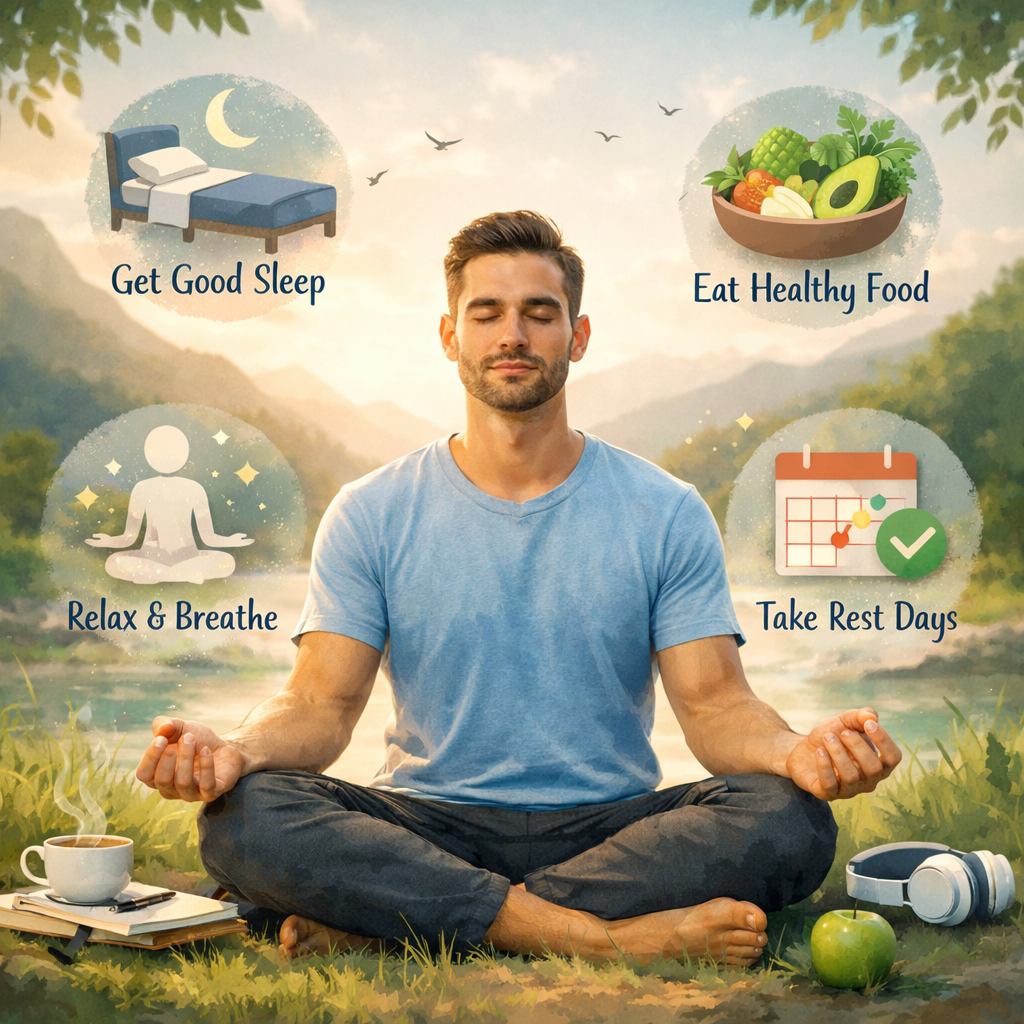
1. Get Enough Sleep
Sleep helps reduce cortisol and restore your body.
👉 Aim for 7–9 hours per night
2. Exercise Regularly
Training itself helps reduce stress.
- Strength training
- Walking
- Light cardio
👉 Even simple movement helps.
3. Practice Relaxation Techniques
Try:
- Deep breathing
- Meditation
- Stretching or yoga
4. Improve Your Nutrition
Certain foods help reduce stress:
- Whole foods
- Fruits and vegetables
- Healthy fats
- Magnesium-rich foods
5. Take Rest Days
Overtraining increases stress.
👉 Rest is part of progress.
6. Limit Caffeine and Screen Time
Too much caffeine or screen exposure can increase stress and affect sleep.
Simple Daily Habits to Reduce Stress
- Go for a short walk
- Listen to music
- Spend time offline
- Stay organized
- Take breaks during the day
Common Mistakes
❌ Ignoring stress completely
❌ Overtraining
❌ Poor sleep habits
❌ Using food as stress relief
❌ No recovery time
Conclusion
Stress is often invisible—but its effects are real.
👉 If you want better fitness results:
- Train hard
- Eat well
- Manage your stress
Because:
A healthy mind = a stronger body.