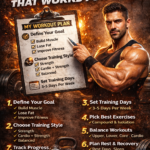
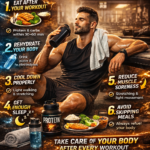
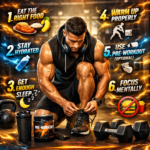
If your goal is to get stronger—not just look fit, but actually build real power—then your training needs to be focused.
👉 Strength training is different from general fitness or fat loss.
It requires:
- Heavy resistance
- Progressive overload
- The right equipment
Not all gym equipment is designed for strength. Some machines are better for endurance or isolation—but if you want serious strength gains, you need to focus on specific tools.
In this guide, we’ll cover the best gym equipment for strength training and how to use it effectively.
What Is Strength Training?
Strength training is about increasing your ability to lift heavier weights over time.
👉 The main goal:
Lift more weight with proper form.
Key Principles of Strength Training
Before equipment, understand the basics:
- Progressive overload (increase weight gradually)
- Low to moderate reps (3–8 reps)
- Longer rest periods
- Focus on compound movements
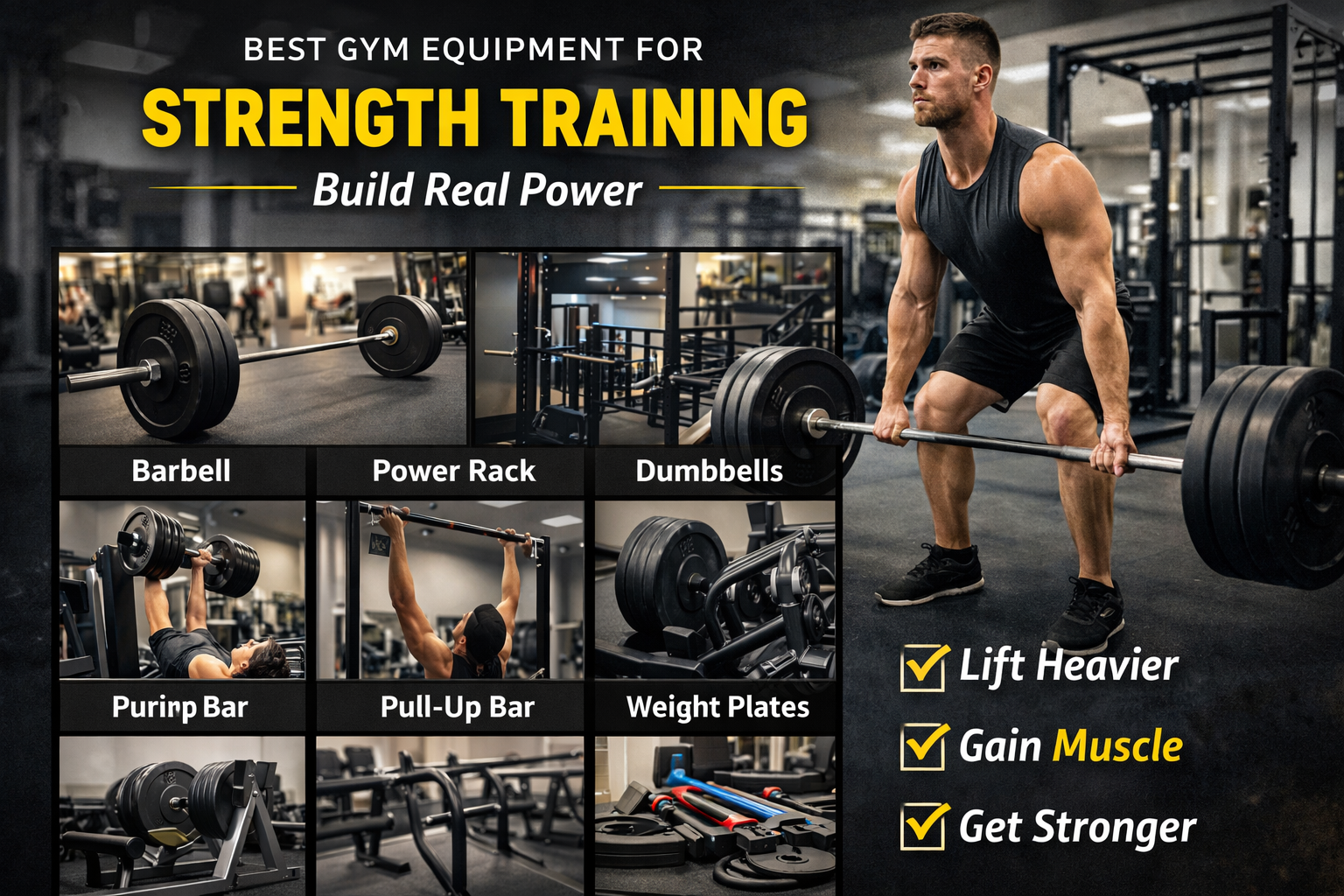
1. Barbell (The Ultimate Strength Tool)
The barbell is the foundation of strength training.
Why It’s Essential:
- Allows maximum load
- Best for compound exercises
- Builds full-body strength
Key Exercises:
- Squats
- Deadlifts
- Bench press
- Overhead press
👉 These are known as the big lifts.
2. Power Rack (Safety + Heavy Lifting)
If you’re lifting heavy, you need safety.
Benefits:
- Allows safe squats and bench press
- Adjustable height
- Supports heavy training
3. Weight Plates (Progressive Overload)
You can’t build strength without increasing resistance.
Why Important:
- Allows gradual progression
- Essential for tracking strength gains
4. Dumbbells (Unilateral Strength)
While barbells are king, dumbbells are crucial.
Benefits:
- Fix muscle imbalances
- Improve stability
- Increase range of motion
5. Pull-Up Bar (Upper Body Strength)
One of the best tests of real strength.
Benefits:
- Builds back and arms
- Improves grip strength
👉 Add weight when it becomes easy.
6. Dip Bars (Chest & Triceps Power)
A powerful bodyweight exercise.
Benefits:
- Builds upper body strength
- Can be progressed with added weight
7. Resistance Bands (Support Tool)
Not for max strength—but useful.
Uses:
- Warm-ups
- Mobility
- Assistance for pull-ups
8. Deadlift Platform (Optional but Powerful)
For serious lifters.
Benefits:
- Stable surface
- Protects equipment
- Enhances performance
Machines vs Free Weights for Strength
Free Weights:
✅ Better for strength
✅ Engage more muscles
✅ Allow heavy lifting
Machines:
❌ Limited for strength
✅ Good for support exercises
👉 Strength = mostly free weights.
Sample Strength Training Workout
Full Body Strength:
- Barbell Squat – 5 sets (5 reps)
- Bench Press – 5 sets (5 reps)
- Deadlift – 3 sets (5 reps)
- Pull-Ups – 3 sets
- Overhead Press – 4 sets
Common Mistakes in Strength Training
❌ Not increasing weight
❌ Training with high reps only
❌ Ignoring rest time
❌ Poor form
❌ Skipping compound lifts
Tips to Build Strength Faster
- Focus on big lifts
- Track your weights
- Rest 2–3 minutes between sets
- Eat enough protein
- Sleep well
Who Is This Equipment For?
👉 Perfect for:
- Beginners who want real strength
- Intermediate lifters
- Athletes
Conclusion
If you want to build real strength, your focus should be clear:
👉 Barbells, racks, and compound movements.
Machines can support your training—but they can’t replace the basics.
Lift heavy, stay consistent, and strength will come.