



Introduction
Training hard is important—but training too much can actually hurt your progress.
👉 This is called overtraining.
Many people think:
“More workouts = faster results”
But الحقيقة:
Too much training can slow you down, not speed you up.
In this article, you’ll learn how to avoid overtraining and keep your progress on track.
What Is Overtraining?
Overtraining happens when you train too much without giving your body enough time to recover.
👉 This leads to:
- Fatigue
- Poor performance
- Increased injury risk
Signs of Overtraining
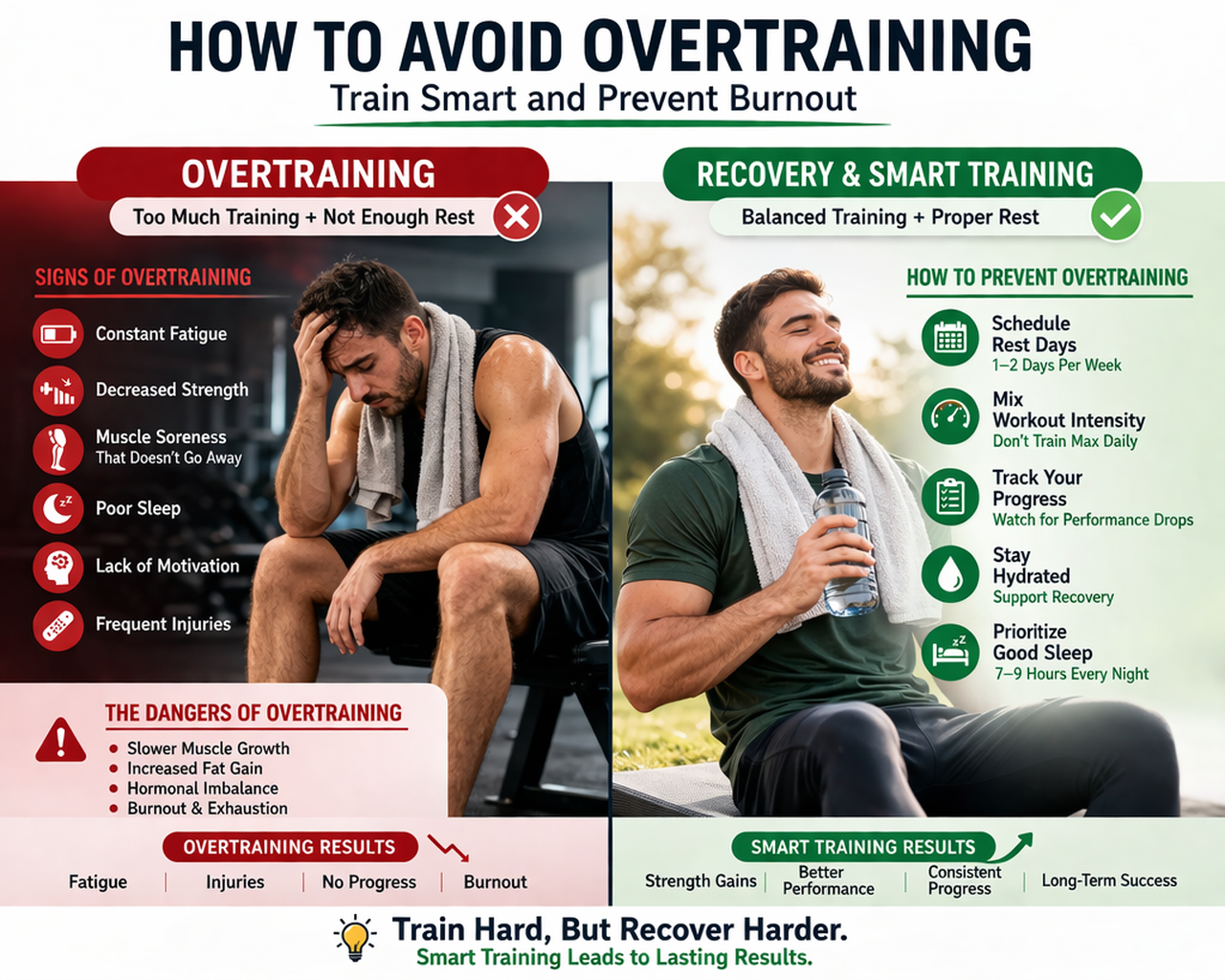
🚨 Constant fatigue
🚨 Decreased strength
🚨 Muscle soreness that doesn’t go away
🚨 Poor sleep
🚨 Lack of motivation
🚨 Frequent injuries
👉 If you notice these signs—you may need more rest.
1. Why Overtraining Is Dangerous
Overtraining doesn’t just affect your body—it affects your mind too.
Effects:
- Slower muscle growth
- Increased fat gain
- Hormonal imbalance
- Burnout
👉 Instead of improving, your progress goes backward.
2. Rest Is Part of Progress
Many people think rest is wasting time—but it’s actually essential.
👉 During rest:
- Muscles repair
- Strength increases
- Energy is restored
No recovery = no progress
3. Balance Between Training and Recovery
The key to success is balance.
👉 You need:
- Hard workouts
- Enough rest
- Proper nutrition
4. How Often Should You Train?
It depends on your level:
- Beginners: 3–4 days/week
- Intermediate: 4–5 days/week
- Advanced: 5–6 days (with proper recovery)
👉 More is not always better.
5. Importance of Sleep
Sleep is your biggest recovery tool.
👉 Without good sleep:
- Recovery slows down
- Performance drops
- Fatigue increases
Aim for 7–9 hours daily.
6. Nutrition and Recovery
Your body needs fuel to recover.
👉 Focus on:
- Protein for muscle repair
- Carbs for energy
- Healthy fats for hormones
7. Listen to Your Body
Your body gives you signals—don’t ignore them.
👉 If you feel:
- Extremely tired
- Weak
- Unmotivated
👉 Take a rest day.
How to Prevent Overtraining
1. Schedule Rest Days
At least 1–2 days per week.
2. Mix Workout Intensity
Don’t train at maximum intensity every day.
3. Track Your Progress
If performance drops, it’s a warning sign.
4. Stay Hydrated
Water supports recovery.
5. Avoid Training to Failure Every Time
Push yourself—but don’t destroy your body daily.
Common Mistakes
❌ Training every day without rest
❌ Ignoring fatigue
❌ Poor sleep habits
❌ Not eating enough
❌ Thinking “more is better”
Conclusion
Overtraining can stop your progress completely.
👉 If you want better results:
- Train hard
- Recover properly
- Listen to your body
Because smart training beats overtraining every time.